Most restaurant owners choose a POS the way they choose a supplier at a trade fair — on a smooth demo and a good price. Then the first Saturday dinner rush arrives, the kitchen misses three tickets, a table waits twenty minutes for its bill, and the 'smart' system becomes the thing everyone works around. The demo is calm. Your restaurant is not.
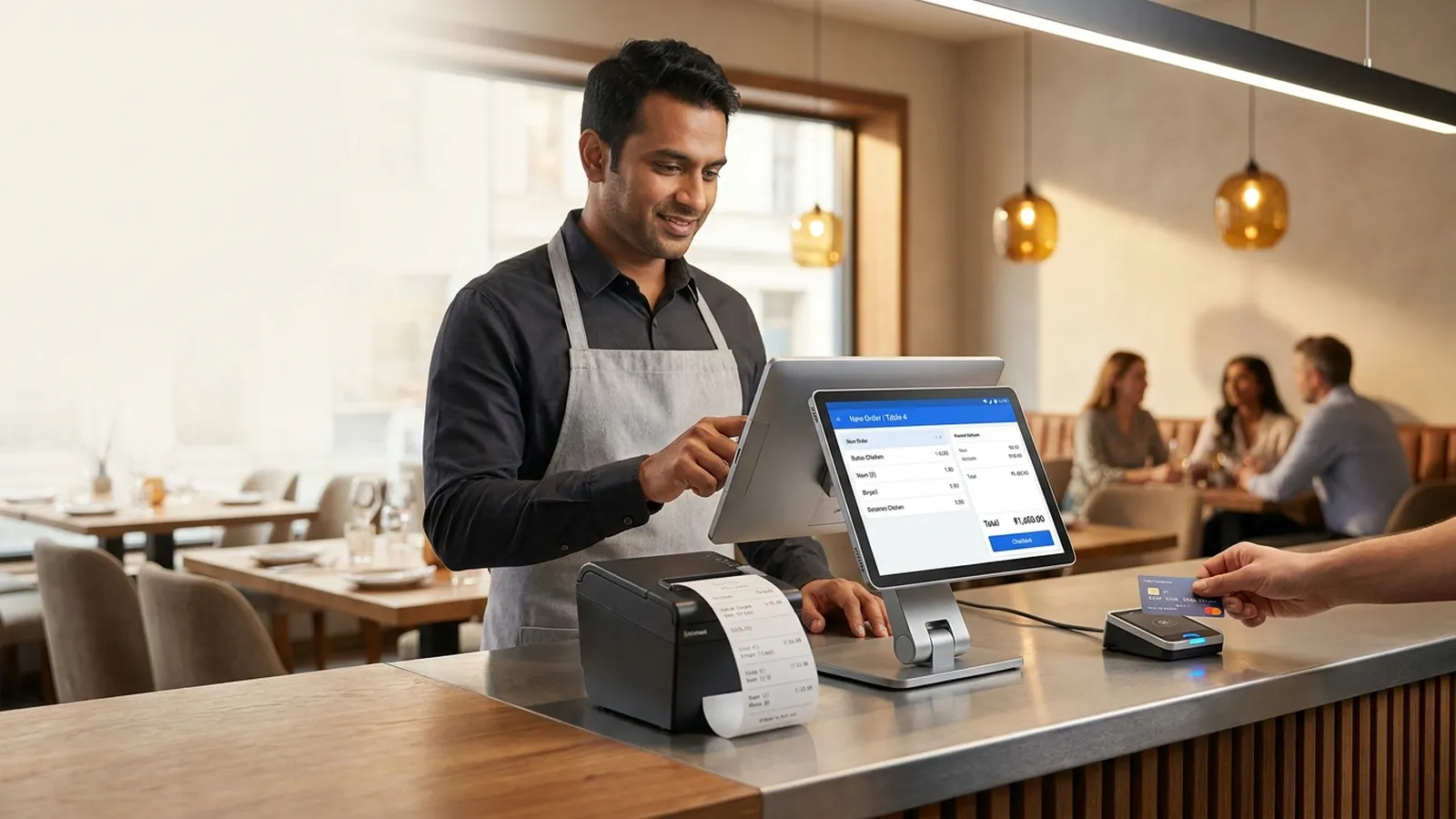
A restaurant POS is not billing software with a food menu bolted on. It has to run the floor, the kitchen and the cash counter at the same time, on a busy night, on the phones your staff already carry. Here is the checklist to judge one before you sign anything.
Judge it against your busiest 30 minutes
Any POS looks good when one waiter places one order in a quiet showroom. The real test is peak service: ten tables turning, two waiters punching orders, the kitchen firing continuously, and three bills being settled by cash, UPI and card at once. Every question below is really asking the same thing — will it hold up then?
1. Do the floor, the kitchen and the bill actually talk to each other?
This is the whole game. When a waiter punches an order, the kitchen should see it instantly as a KOT — no shouting, no paper chits, no walking to the pass. When the food is served and the guest asks for the bill, it should already reflect exactly what was ordered, including that extra portion added mid-meal. If order-taking, the kitchen board and billing are three separate steps someone re-enters, you have bought three problems, not one solution.

2. Can a waiter punch an order in seconds — on a phone?
Your waiters are not typists. If placing an order means squinting at a tiny screen and hunting through nested menus, they will go back to a notepad and enter it later — which is when items get missed and the kitchen gets it wrong. The test: can a new waiter pick a table, add five items with variations and modifiers, and fire it to the kitchen in under a minute, on the same phone he already owns?
3. Does it handle Zomato and Swiggy without double entry?
Delivery is now a real chunk of most menus, and it is where POS systems quietly fail. If online orders land on a separate tablet and someone re-punches them into your POS, you get missed items, wrong totals and a reconciliation nightmare at month-end. The right system pulls dine-in, takeaway, delivery and aggregator orders into one screen, so the kitchen and your reports see everything in one place.
4. Are the bills genuinely GST-correct?
Most standalone restaurants charge 5% GST on food, and the bill must show your GSTIN, the right tax split and a clean breakup. If the POS gets this wrong, or makes you set it by hand for every item, the mistakes surface exactly when you least want them — at filing time. GST handling should be automatic and invisible, not a setting you babysit.
5. What happens the moment the internet drops?
Internet dies mid-service more often than any vendor admits. If your POS freezes when the connection blinks, service stops and guests wait. Order-taking and billing must keep working offline and sync quietly when the line returns. Ask the vendor to show you the app with Wi-Fi switched off — not to tell you about it.
6. Khata, splits and part-payments — the Indian reality
Regulars run a tab. Groups split the bill four ways. Someone pays half in cash and half on UPI. A foreign-built POS often can't handle these gracefully, and your cashier ends up doing mental math at the counter. Make sure splits, part-payments and a running khata for trusted guests are built in, not workarounds.
7. What is the true monthly cost?
Add it all up: the licence, per-device charges, the printer and hardware you're forced to buy, the setup fee, and the AMC for support. A clear monthly price that runs on phones you already own almost always beats a 'cheap' licence that needs a counter full of hardware to work.
The best restaurant POS is the one your staff forget they are using. They seat guests, punch orders and settle bills the way they always have — only now the kitchen never misses a ticket, the bill is always right, and by closing time you know exactly what the night earned.