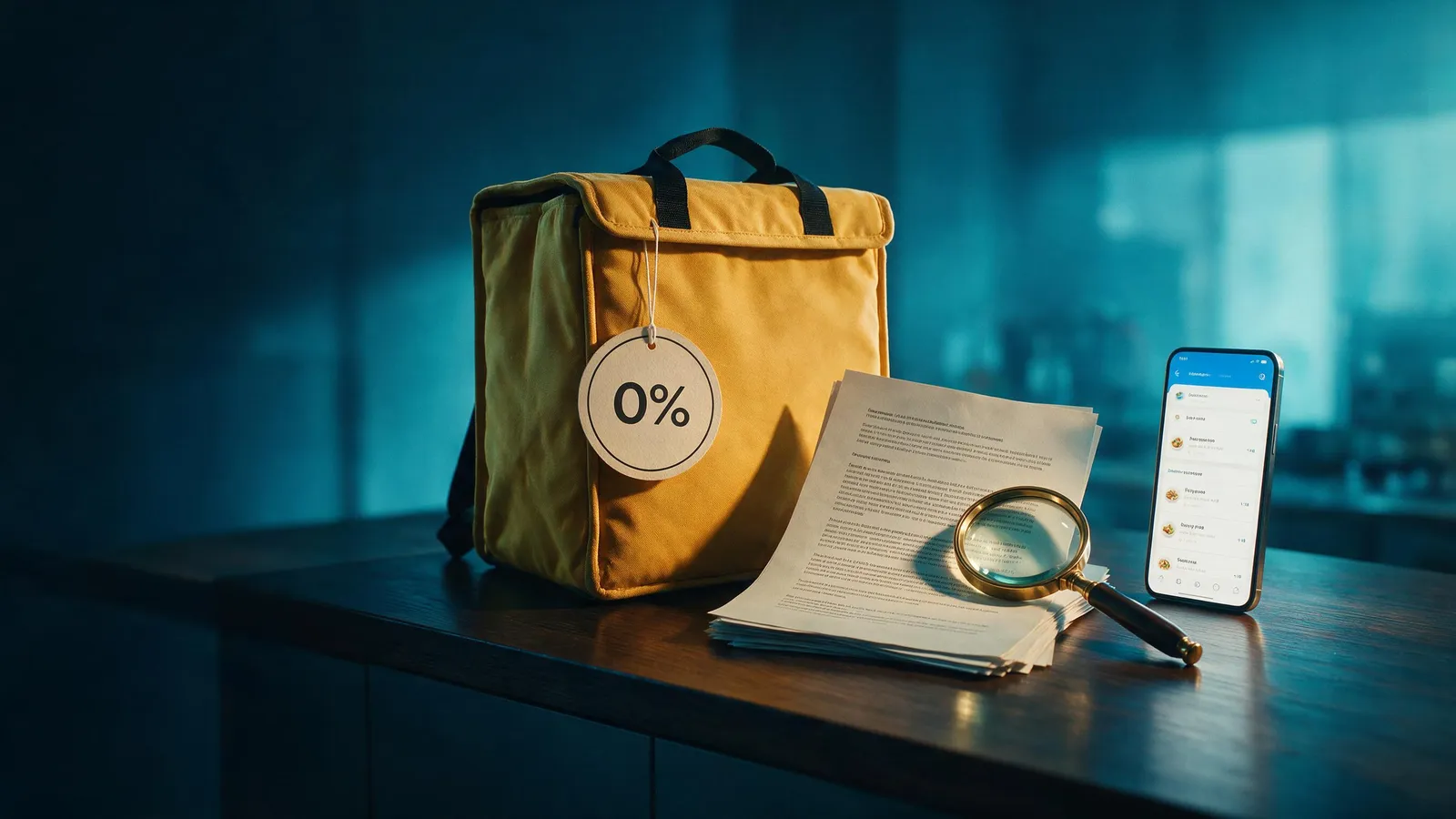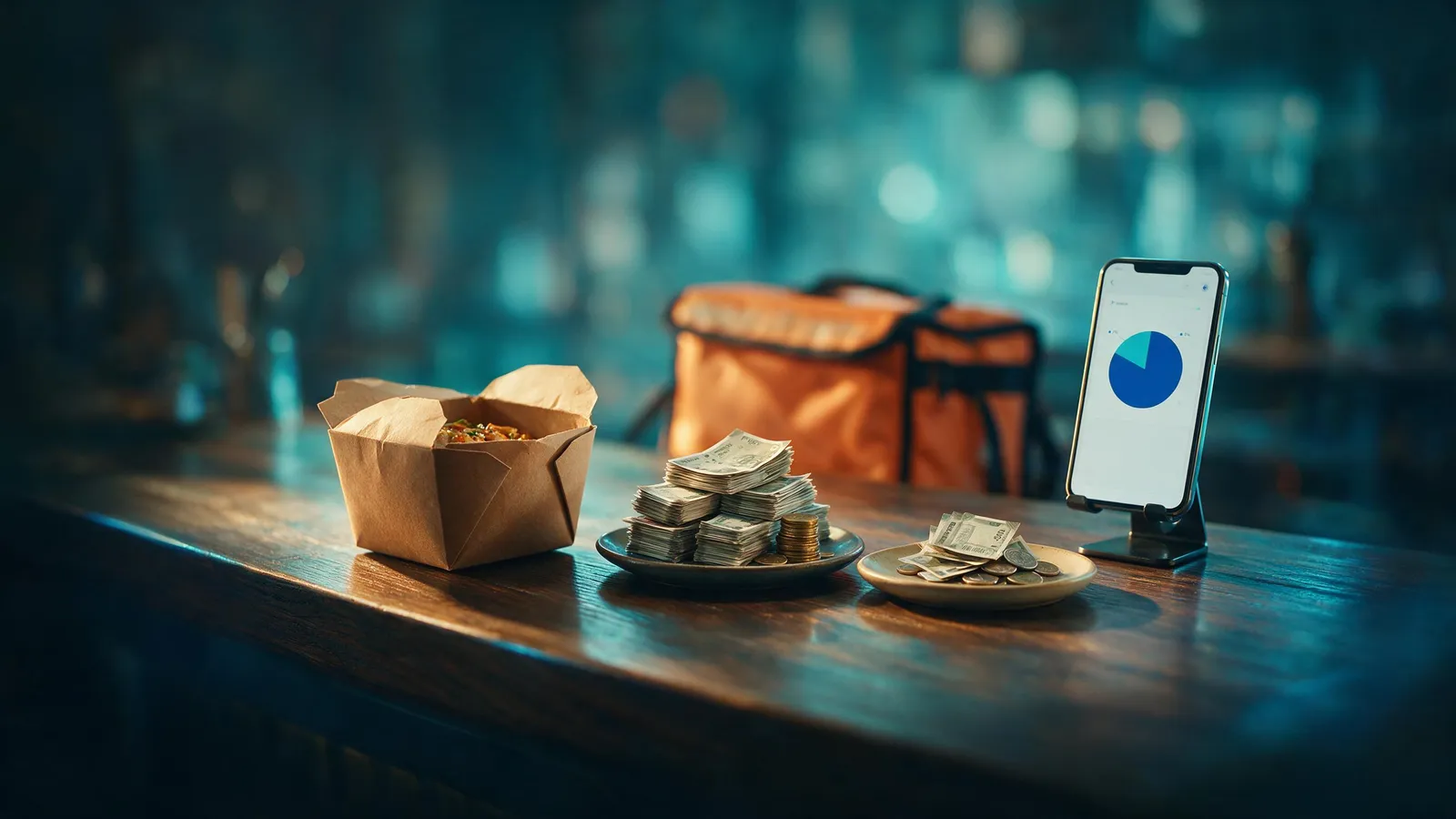
Aggregators bring you covers you would never reach on your own — a customer three kilometres away, at 11pm, who has never seen your board. That reach is real. So is the payout statement at the end of the week that nobody in the restaurant fully understands. Orders worth a lakh went out; far less landed in the bank. Where did the rest go?
Some of that gap is legitimate — commission is the price of the reach. But a meaningful slice is leakage: orders you were never paid for, discounts you funded twice, deductions that don't match the deal you signed. You cannot plug a leak you cannot see. Here is how to see it.
Why the money never matches the orders
The number a guest pays on the app is not the number that reaches you. Between the two sit a stack of deductions, each reasonable on its own and confusing in a pile:
- Commission on the order value — the platform's cut, your biggest and most predictable deduction
- Payment gateway and processing charges on the transaction
- Discounts and offers, part of which you agreed to fund
- GST and TCS handled by the platform, which changes what actually settles to you
- Cancellations and rejections — where the food was made but the payout is disputed
- Packaging or ad-service charges, if you opted into them
None of these is hidden. But spread across a weekly statement with hundreds of orders, they blur into one net figure — and 'the net looked a bit low this week' is not something you can act on.
Reconcile at the order level, not the payout level
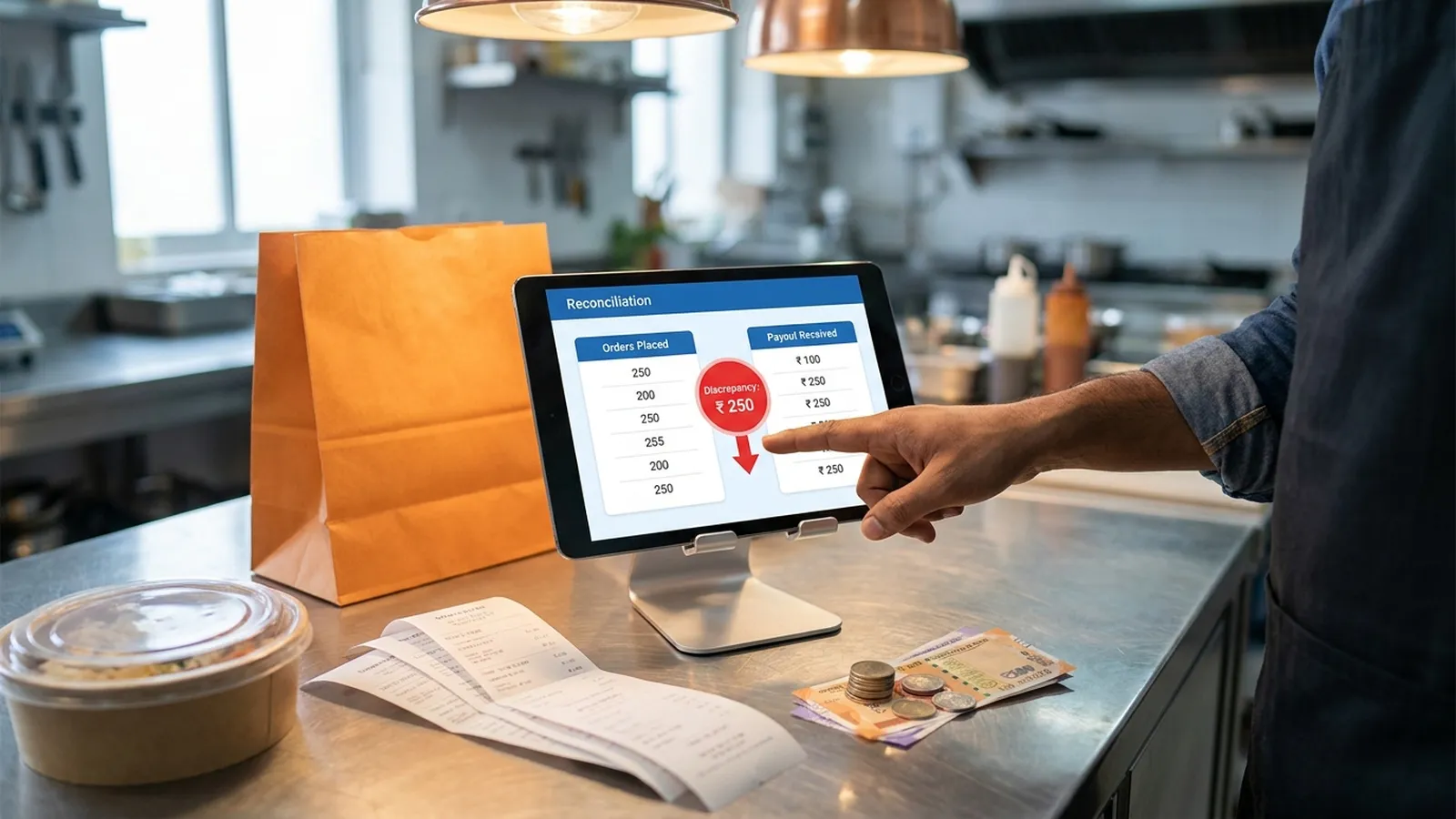
The single habit that changes everything: check the payout order by order, not as one lump sum. For each order, you want three things side by side — what the platform says the order was, what it says it deducted, and what your own kitchen recorded. When those three agree, move on. When they don't, you have found a leak worth a real amount of money.

Bring aggregator orders into the same system as dine-in
If your Zomato orders live only in the Zomato dashboard and your Swiggy orders only in Swiggy's, reconciliation means logging into three places and matching by hand. When every channel — dine-in, takeaway, delivery and both aggregators — flows into one POS, your own record becomes the source of truth you check the payout against. That is the difference between a five-minute glance and a two-hour spreadsheet.
The three numbers to check on every payout
You do not need to audit every line. Each cycle, check three totals:
- Order count — did the platform pay you for the same number of orders your kitchen fulfilled?
- Effective commission rate — is the total commission in line with the rate in your contract, or has it crept up? (Here's how to calculate what the channel really costs you.)
- Cancelled-but-cooked orders — were you compensated for food that was made and then rejected or returned?
A gap in any one of these is money on the table. Two or three orders a week that were cooked but never paid for adds up to a serious sum across a year.
Catch cancelled and 'not received' orders fast
Disputes have a shelf life. A 'customer never received the order' claim or a wrongful cancellation is far easier to contest the same day, when your kitchen ticket and timing are fresh, than three weeks later from a payout statement. A system that flags mismatches quickly turns disputes from a lost cause into recovered revenue.
Delivery will keep growing as a share of most restaurants' revenue. That makes reconciliation not a back-office chore but a core discipline: the difference between delivery that quietly bleeds you and delivery that genuinely adds to the bottom line.