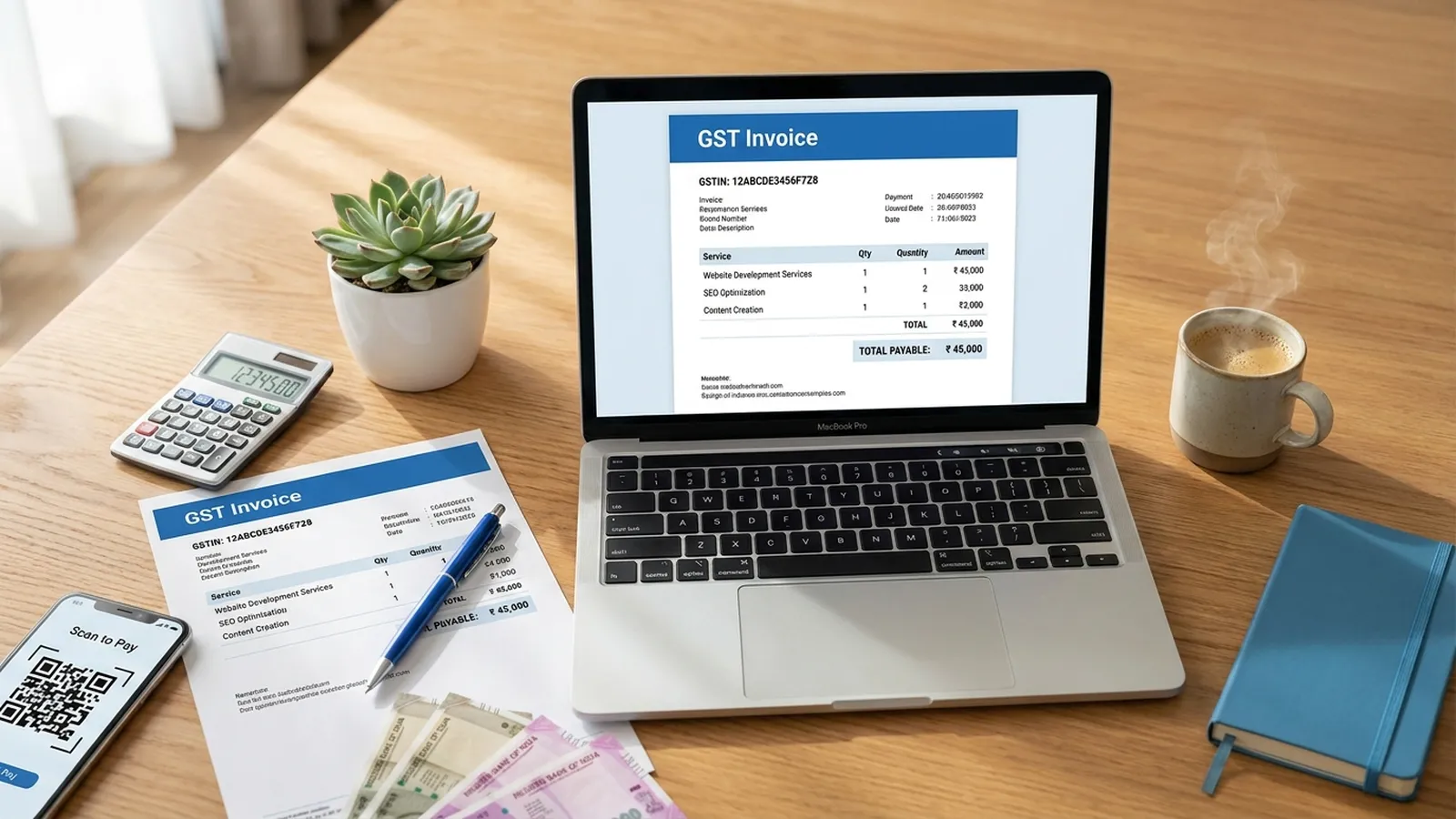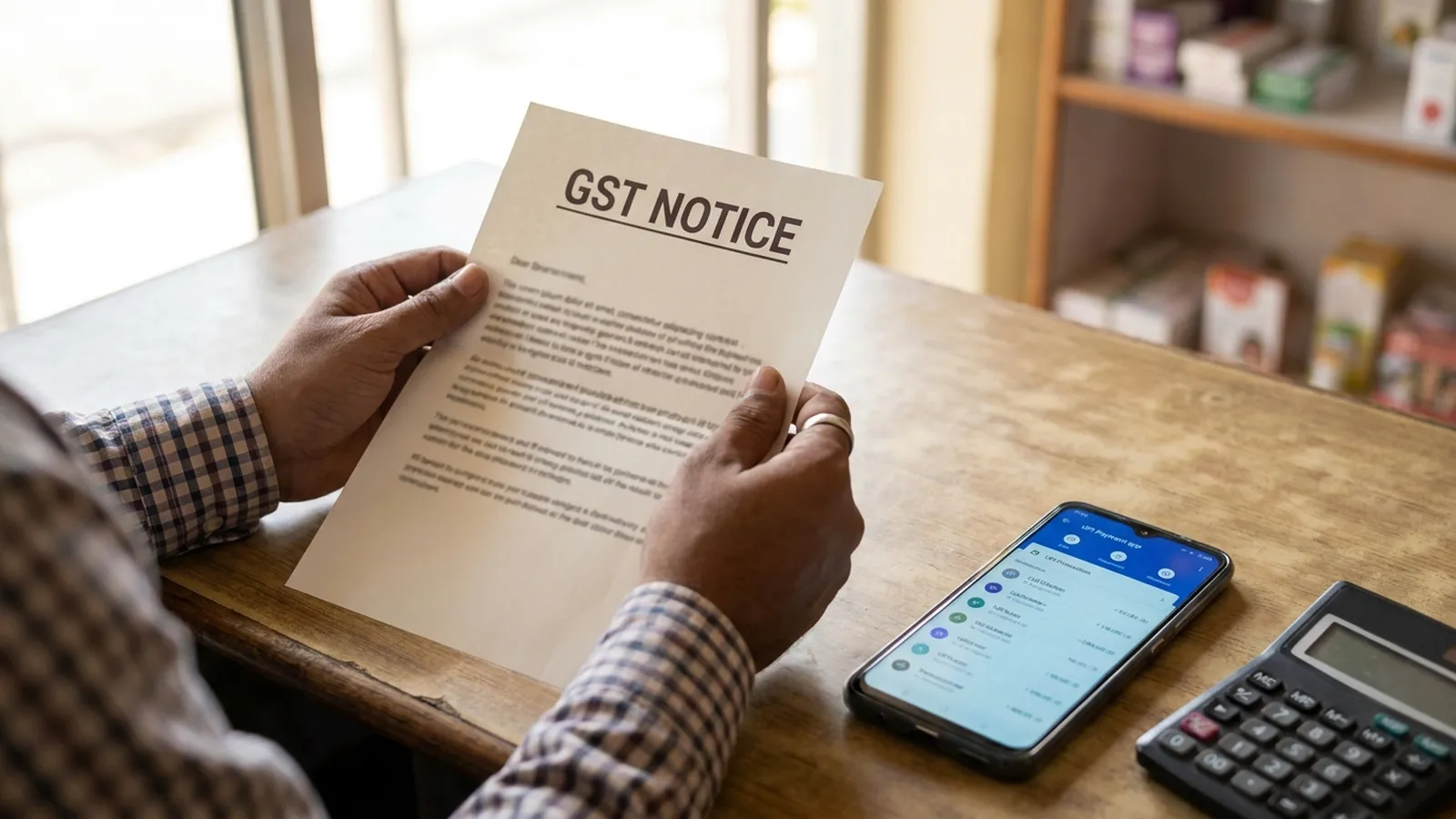
In July 2025, thousands of small traders across Karnataka — kirana owners, vegetable vendors, condiment sellers — opened envelopes from the commercial taxes department demanding GST on years of turnover. The department hadn't visited their shops. It had simply pulled their UPI collection data and added it up. One vegetable vendor's notice demanded ₹29 lakh. Within weeks, 'No UPI — only cash' posters appeared on shopfronts across the state, and the panic made national news.
The state eventually softened — old dues were waived for traders who registered — but the method worked, and it is spreading. Andhra Pradesh, Uttar Pradesh, Tamil Nadu and Gujarat have since sought UPI merchant data of their own. If you take digital payments and you're not registered for GST, this guide is for you: what triggers a notice, exactly what to do if one arrives, and why the obvious-seeming response — going back to cash — is the worst one available.
Why these notices are going out
GST registration becomes compulsory once your annual turnover crosses a threshold: ₹40 lakh for goods (₹20 lakh in some special-category states) and ₹20 lakh for services. For years, small traders past those lines simply weren't visible. UPI changed that — every collection lands against your mobile number or QR, timestamped and totalled. Tax departments now buy that visibility wholesale: pull merchant UPI data, flag everyone whose credits crossed the threshold, and mail notices to the whole list at once.
The catch: UPI credits are not the same thing as taxable turnover. The data can't tell a sale from a personal transfer, a friend repaying a loan, or money moved between your own accounts. The notice assumes it is all sales — and the burden of proving otherwise falls on you. That is why the response matters more than the notice.
Got a notice? Do these five things, in order
- Don't panic, and don't ignore it. The demand on the first page is an estimate built from raw UPI data, not a final bill — but it becomes final if you never reply. Note the deadline (typically 30 days) and treat it as real.
- Reconstruct your actual turnover. Go through the period the notice covers and separate genuine sales from everything else — personal credits, loans returned, transfers between your own accounts, refunds. Bank statements, purchase bills and any sales records you kept are your evidence.
- Reply in writing, with the math. State your actual taxable turnover, list what the UPI total wrongly includes, and attach the proof. If your true turnover is under the threshold, say so plainly and show it.
- Get a professional involved if the amount is serious. For a demand in lakhs, a few thousand rupees of a CA's time changes outcomes — especially on what qualifies as exempt (many unprocessed food items, for instance, carry nil GST even above the threshold).
- If you genuinely crossed the threshold, register now. Registration going forward is cheap; years of assessed back-tax with penalties is not. In Karnataka, traders who came forward and registered had old dues waived — early cooperation consistently earns better terms.
Registered because of this? Your two options
| Composition scheme | Regular GST | |
|---|---|---|
| Who it suits | Traders and small manufacturers up to ₹1.5 crore turnover selling locally | Anyone; compulsory if you sell inter-state or on e-commerce platforms |
| Tax | A flat ~1% of turnover for traders (5% for restaurants) | Full rate per item (0/5/18%), minus input credit on purchases |
| Paperwork | One quarterly payment (CMP-08) + one annual return | Monthly or quarterly returns (GSTR-1, GSTR-3B) |
| Fine print | Can't collect GST from customers or claim input credit | Full compliance, but credit on purchases lowers real cost |
Why 'cash only' makes it worse, not better
The instinct behind the QR codes coming down is understandable — if UPI data caused this, remove the UPI. But it fails on every count. The liability already exists: past UPI data doesn't vanish when you stop accepting it, and departments can look back several years. Suddenly switching to cash after years of digital collections is itself a red flag that invites closer scrutiny, not less. And the daily cost is real — customers who can't pay by UPI walk to the shop next door that takes it.
The traders who come out of these drives unscathed aren't the ones who hid — they're the ones who could show their numbers. If every sale is billed, your turnover is a fact you can prove in an afternoon, not an estimate a tax officer builds from your bank feed. That's the actual protection: not less visibility, but better records than the department's. A simple GST billing app — free, on the phone you already own — gives you exactly that, and freelancers and service providers have their own ₹20 lakh version of the same story.
Where this is happening (and where it's heading)
Karnataka ran the playbook first — thousands of notices in July 2025, a trader backlash, then a settlement offer for those who registered. Since then, Andhra Pradesh, Uttar Pradesh, Tamil Nadu and Gujarat have requested merchant UPI data, and there is no reason to think the list stops there: the data is cheap, the recoveries are large, and the method survived its first public test. If your collections are anywhere near the thresholds, assume your state is next and get your records in order now — it costs nothing and removes the fear entirely. If you're growing past the thresholds anyway, do it properly: our guide on scaling from kirana to distributor covers what formalising actually unlocks.
Frequently asked questions
Is there GST on UPI transactions?
No. UPI payments themselves carry no GST, and no tax is deducted when customers pay you by UPI. The notices are not a tax on UPI — they use UPI data as evidence of business turnover that may have crossed the GST registration threshold.
What is the UPI limit for GST registration?
There is no UPI-specific limit. GST registration becomes compulsory when annual taxable turnover crosses ₹40 lakh for goods (₹20 lakh in special-category states) or ₹20 lakh for services — however customers pay. UPI just makes crossing it visible.
Can GST officers really see my UPI transactions?
Yes. State tax departments have obtained merchant transaction data from payment platforms and used it to identify unregistered traders — that is exactly how the Karnataka notices were generated, and other states have requested the same data.
What happens if I ignore a GST notice?
The department proceeds with a best-judgment assessment based on the UPI figures — the whole estimate becomes a confirmed demand with interest and penalties, and recovery can follow. Replying with your actual numbers, even late, is always better than silence.
Do I need GST registration if I only accept cash?
Yes, if your turnover crosses the threshold — the law is about turnover, not payment method. Switching to cash doesn't erase past liability visible in old data, and it costs you customers today while signalling exactly the wrong thing to an assessing officer.
Digital payments aren't the trap; invisible bookkeeping is. Take the UPI, bill the sale, and let your records — not a data pull — be the version of your business the tax department sees.