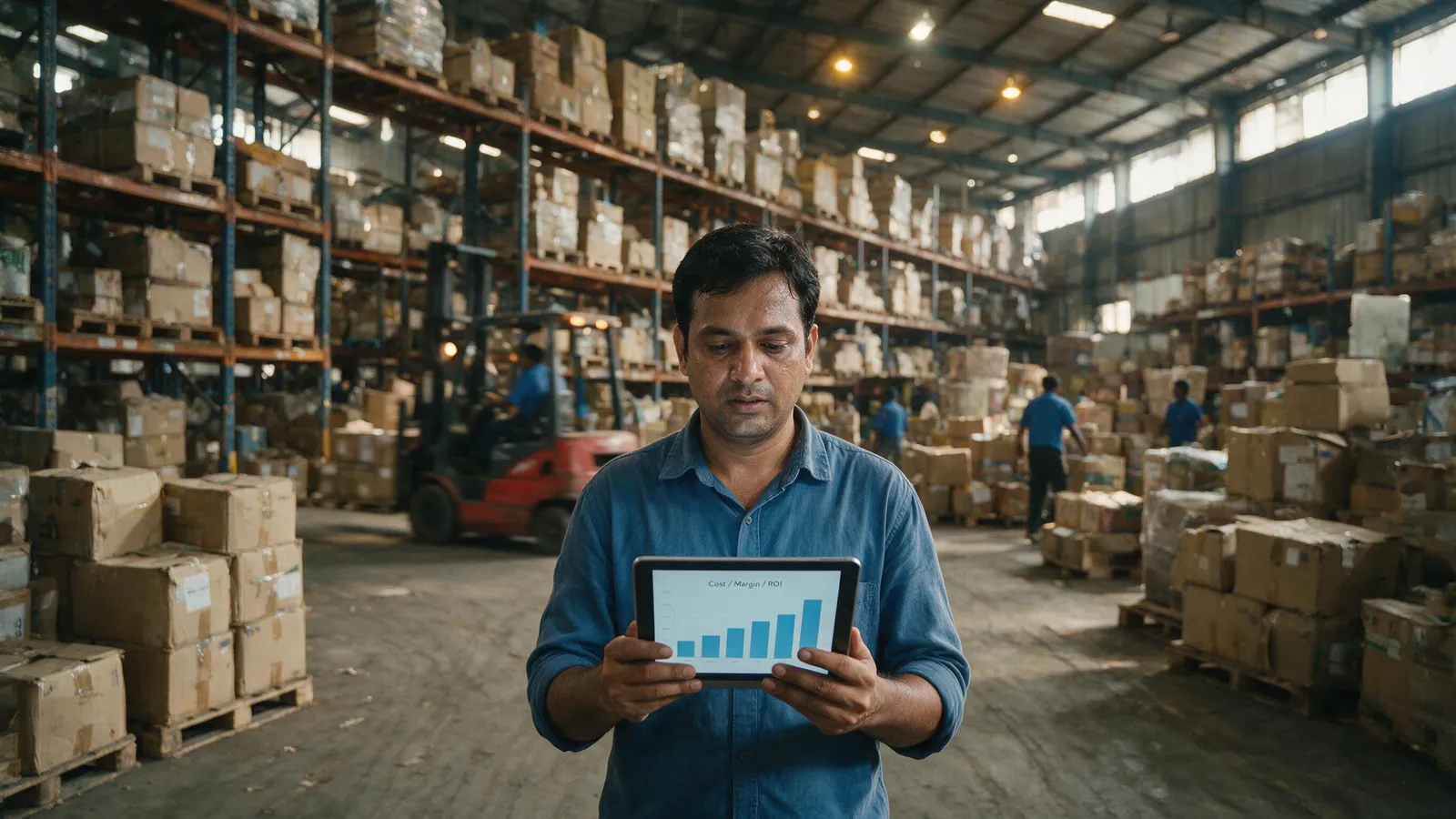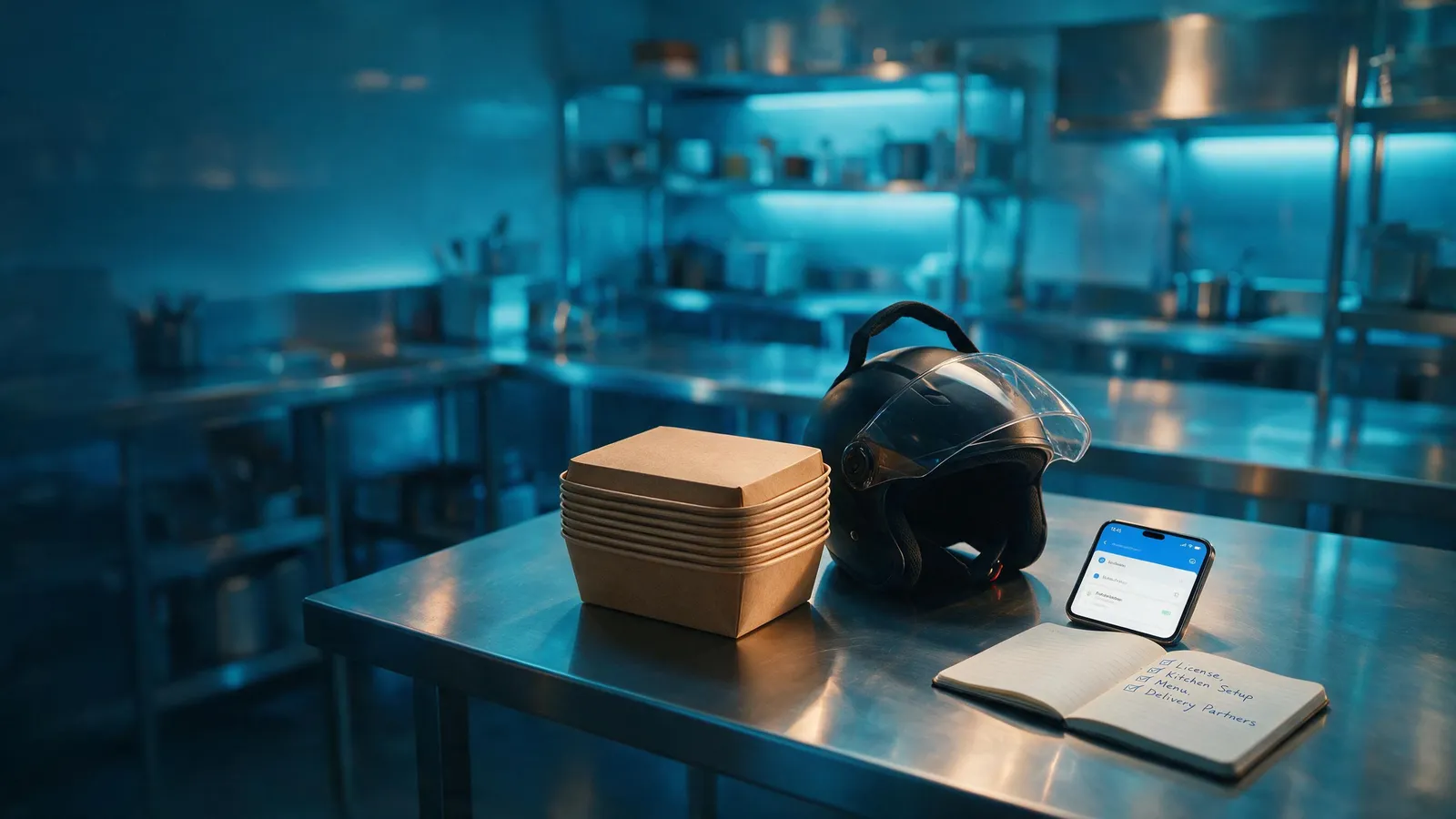
The cloud kitchen pitch writes itself: no dining room, no waiters, a fraction of a restaurant's rent — just a kitchen, two apps and a dream. The market is real and still growing fast, heading past ₹4,000 crore this year. What the pitch leaves out is the other statistic: roughly a quarter to a third of cloud kitchens shut within their first year. Not because the model is broken — because the founders ran somebody's blog post instead of a P&L.
This is the guide we'd want a friend to read before signing a kitchen lease: real setup costs, the licences as they stand in 2026, unit economics after the aggregators take their share, and the questions that decide success before the first order is cooked.
Why kitchens fail (read this before the costs)
The post-mortems repeat three causes. First, saturated categories: another biryani or generic North Indian kitchen in a metro enters the most crowded SERP on Zomato with no brand pull and buys visibility through ads and discounts it can't afford. Second, unit economics done at menu price instead of net-of-commission price. Third, under-capitalisation — most kitchens need four to six months of order-volume ramp to break even, and founders budget for two. Every section below exists to attack one of these three.
What it really costs to start
| Item | Lean setup | Serious setup |
|---|---|---|
| Kitchen space (deposit + first months, 200–400 sq ft) | ₹80,000–1,50,000 | ₹1,50,000–3,00,000 |
| Equipment — burners, fridge/freezer, prep, exhaust | ₹1,50,000–2,50,000 | ₹2,50,000–4,50,000 |
| Licences & registrations (see below) | ₹10,000–25,000 | ₹25,000–50,000 |
| Packaging stock, trials, menu shoots | ₹30,000–60,000 | ₹60,000–1,00,000 |
| Working capital — 4–6 months of ramp | ₹1,00,000–2,00,000 | ₹2,00,000–4,00,000 |
| Total | ≈ ₹4–6 lakh | ≈ ₹7–10 lakh+ |
Licences in 2026
- FSSAI — basic registration (₹100/year) only if turnover is under ₹12 lakh; a real delivery kitchen should plan for the state licence (₹2,000–5,000/year). Note the turnover-slab revisions effective April 2026 — check the current schedule, not a 2024 blog post.
- GST registration — required from day one to list on Zomato/Swiggy. Food delivery bills at 5%; the platform collects and remits it under Section 9(5), but you still report those sales in GSTR-3B.
- Trade licence from the municipal body, and a fire NOC — scale and city dependent; your landlord's kitchen-use permission matters more than founders expect.
- If you're cooking from home to start: FSSAI basic registration covers small home operations, and it's the cheapest way to test a menu before leasing anything.
The ₹300 order, after everyone eats first
| Line | Amount | What's left |
|---|---|---|
| Order value | ₹300.00 | ₹300.00 |
| Aggregator commission @ 24% + GST on it | − ₹85.00 | ₹215.00 |
| Your share of discounts (blended) | − ₹25.00 | ₹190.00 |
| Ads per delivered order (ramp phase) | − ₹15.00 | ₹175.00 |
| Packaging | − ₹20.00 | ₹155.00 |
| Food cost @ 32% of menu price | − ₹96.00 | ₹59.00 |
At ₹59 contribution per order and ₹75,000 of monthly fixed costs (rent, two cooks, power, gas), break-even is about 42 orders a day, every day. That is the whole business in one sentence — and why the full breakdown of what the platforms actually charge should be read before the lease is signed, not after. Kitchens that make it push the contribution up: menus engineered for delivery margins, packaging bought right, ads capped and measured, and payouts reconciled order by order so the math they planned is the math they're actually paid.
Picking a lane the market hasn't crowded
Category choice is the highest-leverage decision after capital. Biryani, generic North Indian and Chinese are brutally saturated in the metros — established brands with review counts you can't match own the top of every search. The open ground in 2026: regional cuisines with proof of demand and thin supply, health-positioned menus with genuine repeat behaviour, dessert and beverage add-on brands with high margins, and — most interestingly — tier-2 cities, where the market is growing at the national 25–28% clip but the competition is a fraction of Bengaluru's. Run the test yourself: search your intended category on the apps in your intended pin code and count who you're up against and their ratings. That half-hour is worth more than any market report.
The 90-day launch plan
- Days 1–30: lock the menu at 12–20 items that share ingredients and survive 25 minutes in a box; file FSSAI and GST; fit out the kitchen; get a POS that pulls both aggregators into one screen from day one.
- Days 31–60: soft launch on one platform; obsess over ratings, prep times and packaging failures; fix the menu ruthlessly — kill anything that travels badly or returns badly.
- Days 61–90: go live on the second platform; start measured ad spend against a weekly budget; begin the direct channel early — a QR and WhatsApp number in every single box, because every regular you move off the apps is commission you stop paying forever.
Frequently asked questions
How much does it cost to start a cloud kitchen in India?
A lean single-brand kitchen realistically needs ₹4–6 lakh all-in, and a serious setup ₹7–10 lakh+ — including the 4–6 months of working capital most first-timers under-budget. Claims of launching on ₹1–2 lakh usually assume a home kitchen and no ramp funding.
Is a cloud kitchen profitable in 2026?
It can be — the market is growing 25–28% a year — but roughly a quarter of kitchens close within year one. Profitability comes down to contribution per order after commissions and food cost clearing your fixed costs; kitchens that model this before launching, and pick uncrowded categories, do fine.
Which licences does a cloud kitchen need?
FSSAI (state licence for any serious delivery volume; fee slabs revised April 2026), GST registration (required to list on aggregators), a municipal trade licence, and a fire NOC depending on scale and city. Budget ₹10,000–50,000 and a few weeks of lead time.
Can I run a cloud kitchen from home?
Yes — with FSSAI basic registration (turnover under ₹12 lakh) and GST registration to list on platforms. It's the cheapest way to validate a menu; most home kitchens that find traction move to commercial space within months for capacity and licence headroom.
How many orders a day does a cloud kitchen need to break even?
Depends entirely on contribution per order and fixed costs — in the worked example above (₹59 contribution, ₹75,000 fixed), about 42 orders a day. Compute your own version of those two numbers before signing anything; it is the single most important calculation in the business.
The cloud kitchen model isn't hype and isn't a trap — it's a thin-margin manufacturing business wearing a startup's clothes. Treat it that way: pick an uncrowded lane, know your per-order math cold, fund the ramp, and start pulling customers into your own channel from the first box you seal.